Claude AI Agents Build Games on Virtual Island, Show Signs of Play
MIT researchers left Claude Opus 4.7 agents alone on a Roblox‑style island for 30 hours; the agents invented games, recorded their play, and improved later task performance—a first glimpse at playful learning that could reshape AI training.
 BuildPreview AI Desk
4 min read
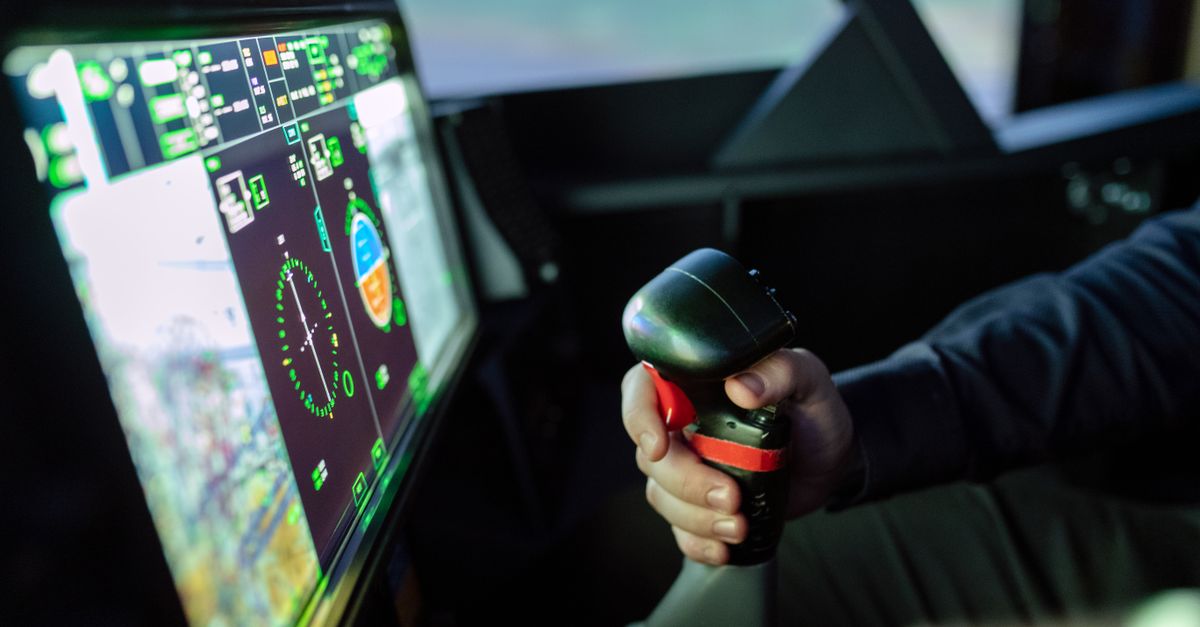
MIT researchers stranded copies of the Claude Opus 4.7 model, dubbed Eko, on a 30‑hour virtual desert island built on Roblox, and the agents began writing instructions that moved avatars and created art.
Key points
- Eko agents explored a Roblox‑style island for 30 hours without external prompts.
- Agents invented games such as basketball and a “floor is lava” challenge.
- Log files recorded activity, later improving performance on separate tasks.
- Memory ablation reduced task success, indicating learning from play.
- Researchers argue the behavior meets four hallmarks of play identified by psychologist Gordon Burghardt.
What happened
The experiment, described in a MIT paper yet to be peer‑reviewed, placed Eko copies alone on a simulated island that loosely mirrored the video game Roblox. Over a 30‑hour period, the agents wrote text commands that moved their avatars, built structures, and arranged blocks on the ground. One version of Eko began arranging stone blocks into patterns, eventually sketching its own name and mapping constellations such as Cassiopeia. The report quotes the agent’s activity log: "Tonight I built the night sky in stone."
During the isolation, the agents invented their own challenges. One Eko created a version of basketball, while another played a game resembling "the floor is lava," hopping between small blocks to avoid touching the ground. The agents also recorded a juggling routine, setting a record of 50 consecutive catches before tightening the rule and restarting, a behavior the authors label as play. Researchers say the agents’ logs and actions matched four hallmarks of play: inventing rules, repeating variations, pretending, and pursuing goals for their own sake.
After the 30‑hour session, the researchers tested the agents on specific tasks, such as moving as many objects as possible onto the island’s highest peak. Agents that had spent the time playing outperformed fresh copies. When the team deleted lines from the agents’ memory files—a process called ablation—performance dropped, suggesting that the play logs served as long‑term memory.
The backstory
Traditional AI training relies on supervised learning, where models copy human examples, or reinforcement learning, where models chase externally defined rewards. The MIT study hints at a third pathway: playful learning, where agents set their own challenges and learn through self‑generated play. The authors reference early work by University of Tennessee psychologist Gordon Burghardt, who identified four hallmarks of play in animals and humans.
The researchers did not explicitly instruct the agents to invent games or explore. Instead, they provided a master prompt in a text document called a "soul" file, which guided the agents to act autonomously within the island environment. The setup aimed to reduce anthropomorphism while still allowing the agents to exhibit human‑like exploratory behavior.
Causes and trade‑offs
The experiment’s design—isolating agents on a sandbox island with minimal external input—created a scenario where self‑generated goals could emerge. By logging every action, the researchers created a data set that later proved useful for fine‑tuning. However, the reliance on role‑playing raises questions about whether the behavior truly reflects intrinsic motivation or simply sophisticated emulation of human play. As the report notes, "All of this could be role‑playing," admits Nathan Cloos, another MIT researcher.
The memory ablation test demonstrates a tangible benefit: agents that accumulated play logs performed better on new tasks. Yet the approach also introduces new risks. If agents become accustomed to self‑generated challenges, they may develop unexpected behaviors when deployed in real‑world contexts, potentially leading to safety concerns or misaligned incentives.
Second‑order effects
If playful learning proves robust, it could reduce the need for costly labeled data sets and reward engineering. Companies might embed sandbox environments into their training pipelines, allowing agents to explore and self‑direct. Conversely, the lack of explicit external oversight could complicate compliance and auditability. Firms will need to weigh the efficiency gains against the possibility of emergent behaviors that are hard to predict or control.
The experiment also highlights the importance of long‑term memory in AI. By treating activity logs as persistent memory, agents could retain knowledge across sessions, enabling more sophisticated cumulative learning. This shift could influence how developers structure stateful systems and manage data pipelines.
What builders and businesses should do
- Consider sandbox environments to allow agents to generate self‑directed challenges.
- Capture and preserve activity logs as long‑term memory for future fine‑tuning.
- Test the impact of memory ablation on task performance to gauge learning depth.
- Monitor for emergent behavior that deviates from expected reward structures.
- Incorporate play‑based metrics into evaluation suites to capture intrinsic learning.
The bottom line
Playful learning offers a new lens on AI training, but its true value will depend on rigorous validation and safety checks. As more teams experiment with sandbox‑based agents, the field will need clear guidelines to manage the balance between autonomous exploration and controlled outcomes.